Electrical
Best Car Audio Batteries in 2026
Researched from published physics, alignment relations and manufacturer specifications. Updated .
Quick answer
Car audio batteries and starting batteries are built for different jobs even though both sit under the hood or in the trunk. A starting battery is optimized for a huge, brief burst of cranking current, measured in CCA or MCA, and then gets recharged slowly while the engine runs. An amplifier rack does the opposite: it draws sustained current for as long as the music plays, which is exactly what a deep cycle design, AGM or lithium, is built to handle without the plates degrading the way a starting battery's would under that kind of repeated deep draw.
Adding a battery, by itself, does not fix a system running low on power. If the alternator cannot keep up with the amplifier's draw, a second battery just gives the system a bigger reservoir to drain before voltage sags again; the alternator still has to do the actual recharging once the music stops. A battery upgrade pairs best with an alternator that can support the system's real current draw, and buying a bigger battery as a substitute for that alternator work usually just delays the same voltage-sag symptom by a few songs.
How we chose
We did not install or load-test any of these batteries ourselves. Picks are based on published chemistry, AGM or lithium, amp hour capacity, and the ratings each manufacturer targets for their audio-specific line, compared against the general amp hour range car audio installers recommend for a given system's power draw. None of these are rated as starting batteries and none should be used as one.
Why a CCA-rated battery does not belong in an amp rack
Cold cranking amps and marine cranking amps describe how much current a battery can deliver in a short burst to turn over an engine, and starting batteries are built with thin plates designed for that brief, high-current job before returning to a nearly full charge. An amplifier draws current continuously while music plays, which is a completely different discharge pattern, and repeatedly deep-cycling a starting battery this way shortens its life fast.
Deep cycle AGM and lithium batteries built for audio are designed around amp hour capacity instead, meaning how much current they can supply steadily over time. That is the number that actually predicts how long a battery keeps an amplifier fed at full output, and it is why a battery's CCA or MCA rating is close to irrelevant for an audio-focused purchase.
Chemistry and capacity, side by side
| Battery | Chemistry | Amp hours | Best fit |
|---|---|---|---|
| MightyMax VP600 | AGM | 18 Ah | Single amp, modest system |
| DS18 INF18 | AGM | 18 Ah | Single amp, modest system |
| XS Power D680 | AGM | 20 Ah | Mid-size multi-amp rack |
| Big Jeff 22Ah LFP | Lithium (LiFePO4) | 22 Ah | Weight-conscious mid-size rack |
| XS Power D975 | AGM | 43 Ah | High-output rack |
| XS Power RSV S5 | Lithium titanate | Not published in Ah, $749.99 | Competition-grade high-output rack |
Published figure Source: Manufacturer product listings as published. Amp hour capacity is a better predictor of audio performance than CCA or MCA, which measure starting current instead of sustained draw.
Buying tips
- Size battery capacity to the system's total RMS draw and how long it needs to sustain full output, not to the vehicle's factory starting requirements.
- Lithium batteries generally weigh less than an AGM of similar amp hour capacity, which matters in a weight-conscious build, but usually costs more per amp hour.
- A second or third battery only helps if the alternator can recharge the added capacity; check alternator output before adding more battery.
- AGM batteries are sealed and spill-proof, which matters for a battery mounted in the cabin or trunk rather than the engine bay.
- Confirm physical mounting: audio batteries are often a different case size than the factory starting battery and need a proper hold-down, not just wedged into a corner of the trunk.
A bigger battery does not replace a bigger alternator
Adding battery capacity without upgrading the alternator only moves the problem. A second or third battery gives the system a larger reservoir before voltage sags, but the alternator still has to recharge that added capacity once the music stops. A system that dims lights or loses output at sustained volume usually needs more alternator output, not just more battery.
AGM vs lithium for a car audio build
AGM batteries are the more established choice for car audio, widely available at a range of capacities and generally less expensive per amp hour than lithium. Lithium, specifically LiFePO4 and lithium titanate designs built for audio, typically weighs less for the same capacity and can often deliver higher sustained current, which matters for the largest amplifier racks. The tradeoff is cost: lithium audio batteries usually carry a higher price per amp hour than a comparable AGM unit.
Weight matters most in builds where every pound is being tracked, such as a competition SPL vehicle, where a lighter lithium bank can free up capacity elsewhere in the build. For a daily-driven system, the weight difference between an AGM and a lithium battery of similar capacity is usually small enough that price and total amp hour need decide the purchase instead.
The picks, by tier
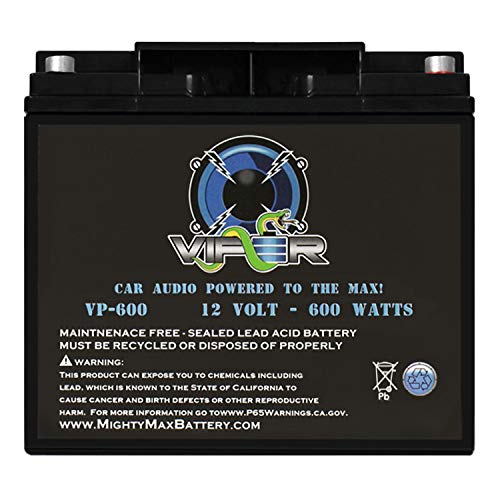
Mighty Max Viper VP-600
$44.99An 18 amp hour AGM deep cycle battery suited to a single modest amplifier setup, a reasonable first upgrade away from relying on the factory starting battery alone.
Check price on Amazon
DS18 INF-18
$77.95Another 18 amp hour AGM option built specifically for audio duty, giving a beginner build a deep cycle alternative to the vehicle's CCA-rated starting battery.
Check price on Amazon
XS Power D680
$159.9920 amp hours of AGM capacity steps up from an entry-level battery for a mid-size multi-amplifier system that draws more sustained current.
Check price on Amazon
Big Jeff 22Ah LiFePO4
$379.95A 22 amp hour LiFePO4 lithium battery trades a higher price for lower weight than a comparable AGM, worth it for a weight-conscious mid-size build.
Check price on Amazon
XS Power D975
$217.64A 43 amp hour AGM battery built for a high-output rack running multiple amplifiers with sustained current draw well beyond a single-amp setup.
Check price on Amazon
XS Power RSV-S5 lithium titanate
$749.99A lithium titanate battery listed at 749.99 dollars, built for competition-grade racks that need to sustain very high current without the plate degradation a repeatedly deep-cycled AGM would see.
Check price on AmazonFrequently asked questions
- Can I use a regular car battery for my amplifier?
- A regular starting battery is built for a brief, high-current burst to crank the engine, not for the sustained current draw an amplifier produces while music plays. Using one this way tends to shorten its life quickly and does not deliver the steady voltage an amplifier needs at high output. A deep cycle AGM or lithium battery built for audio use is the appropriate choice instead.
- How many amp hours do I need for my system?
- It depends on total RMS power draw and how long the system needs to sustain full output before recharging matters. A single modest amplifier setup can often run on an 18 to 20 amp hour AGM battery, while a multi-amplifier high-output rack typically needs 40 or more amp hours, sometimes across multiple batteries, paired with an alternator that can keep up.
- Do I need to upgrade my alternator if I add a battery?
- Often, yes. A bigger or additional battery only stores more energy; it does not generate it. If the alternator's output is already close to its limit feeding the amplifiers directly, adding battery capacity just delays when voltage sags rather than solving it, since the alternator still has to fully recharge every battery once the system stops drawing peak current.
- Is lithium worth the extra cost over AGM for car audio?
- Lithium batteries built for audio, such as LiFePO4 or lithium titanate designs, generally weigh less and can sustain higher current than an AGM of similar capacity, which matters most in the largest, most demanding amplifier racks. For a modest single-amp system, the weight and current advantage matters less, and AGM usually delivers better value per amp hour.
- Where should an audio battery be mounted?
- AGM batteries are sealed and spill-proof, which makes trunk or cabin mounting practical, but they still need a secure, vibration-rated hold-down and battery terminals that will not short against a metal surface. Lithium batteries have their own mounting and ventilation guidance from the manufacturer, and both types should be fused close to the battery terminal per standard car audio wiring practice.
- What is the difference between CCA and amp hours?
- CCA measures how much current a battery can deliver in a short burst at low temperature, which predicts engine starting performance. Amp hours measure how much current a battery can supply steadily over an hour, which predicts how long it can feed a continuous load like an amplifier. Audio batteries are rated in amp hours because that is the number that actually matters for sustained music playback.
Researched guidance, not professional advice. Buy for amp hours and sustained current, not CCA, and pair any added battery capacity with an alternator that can actually recharge it.