Enclosures
Best Ported Subwoofer Boxes in 2026
Researched from published physics, alignment relations and manufacturer specifications. Updated .
Quick answer
A ported subwoofer box uses a tuned port to add output at and below the tuning frequency, which is why ported boxes usually sound louder for the same amplifier power than a sealed box of similar size. That extra output only shows up when the internal volume and port tuning match what the subwoofer manufacturer designed the driver around. A prebuilt ported box that is too small chokes the driver's excursion at low frequencies; one that is too large can let the cone move past its rated limit at the port's tuning frequency.
None of the boxes below should be treated as a universal fit for a given driver. Some list a stated internal volume, in which case that number is the one to check against the subwoofer's own spec sheet. Others do not publish internal volume at all, which is worth knowing before ordering, since guessing on a ported box is the single most common way a new subwoofer ends up sounding worse than the driver it replaced. Prebuilt boxes also save real time over a scratch build, since cutting, gluing, and bracing a box from raw MDF sheet goods takes tools and a weekend most people would rather spend tuning the finished system. The tradeoff for that convenience is that a prebuilt box's internal volume is fixed at the factory, so the matching work shifts entirely onto the buyer, comparing the box's stated figure against the subwoofer's recommended range before the order ships rather than after the box shows up on the doorstep.
How we chose
We did not build or listen to any of these boxes in person. Picks are based on published construction details, stated internal volume where the manufacturer lists one, port style, and MDF thickness, compared against what builders and subwoofer manufacturers commonly specify for a 12-inch ported enclosure. Where a listing omits its internal volume, that is noted plainly rather than assumed.
Why internal volume is the only number that matters
Every subwoofer has a manufacturer-recommended enclosure volume range, usually published as a sealed range and a separate ported range with a suggested tuning frequency. A prebuilt box's own stated internal volume, when the manufacturer lists one, is the figure to compare against that range, not the box's exterior dimensions or its price tier. Two boxes that look identical from the outside can have meaningfully different internal volume once port displacement, bracing, and panel thickness are accounted for.
Ported enclosures are less forgiving of a volume mismatch than sealed enclosures. A sealed box that is a bit off from the ideal volume mostly changes how tight or loose the bass feels. A ported box that is off on volume or tuning can push the driver past safe excursion right at the port's tuned frequency, which is also usually the frequency the box is asked to work hardest at. That is the tradeoff for the extra output: louder over a narrower, more precisely tuned band.
What each box publishes
| Box | MDF thickness | Port style | Stated internal volume |
|---|---|---|---|
| ASC Ported 12 | 5/8 in | Rear ported | Not published, check listing |
| Hifonics MBXP-112 | Not published | Ported | Not published, check listing |
| QPower HD112VL | Not published | Side ported | Not published, check listing |
| QPower QBomb12VL | Not published | Ported | Not published, check listing |
| QPower Horn 12 | 5/8 in | Horn-loaded ported | 2.0 cu ft, as stated |
| Skar AR1x12V | Not published | Kerf-cut port | Check current listing |
Published figure Source: Manufacturer product listings as published. Confirm the current listing before buying; manufacturers update internal volume and port tuning over time without changing the model name.
Buying tips
- Find the subwoofer's own manual or manufacturer spec sheet for its recommended ported volume and tuning frequency range before choosing a box.
- If a box listing does not state internal volume, message the seller or check a build-quality forum thread before assuming it will work with a specific driver.
- Kerf-cut and slot ports are more compact than a straight round port tube tuned to the same frequency; side-ported and rear-ported boxes trade internal volume for placement flexibility in a smaller trunk.
- Thicker MDF, 5/8 inch or better, resists wall flex at high output better than thinner panel stock.
- Armor coating or carpet finish is a durability and cosmetic choice, not a performance number, so do not let finish decide the box over stated volume.
Do not guess on volume
A wrong internal volume can damage a subwoofer, not just make it sound worse. Never assume a prebuilt ported box suits a specific driver unless the box publishes its internal volume and that volume falls inside the subwoofer manufacturer's own recommended ported range. When a listing does not state internal volume, treat that as a missing safety-relevant spec, not a minor omission.
Ported vs sealed, quick refresher
Ported boxes are louder for the same power because the port adds acoustic output around its tuning frequency, but that output rolls off faster below tuning than a sealed box's response does. Sealed boxes trade some peak output for a broader, more even low-frequency response and much more tolerance for a volume that is not perfectly dialed in. A builder chasing outright output at a specific frequency usually reaches for ported; a builder who wants even bass across a wide range of music without fussing over exact volume usually reaches for sealed.
The picks, by tier
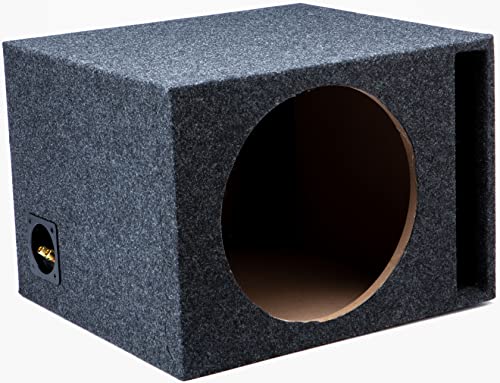
ASC single 12 ported box
$54.955/8 inch MDF construction and a straightforward ported layout make this a reasonable first ported box, provided the listing's internal volume is checked against the subwoofer going into it.
Check price on Amazon
Maxxlink MBXP-112
$54.99A budget-friendly single-12 ported box from an established car audio brand, useful for a first ported build once the internal volume is confirmed against the driver's recommended range.
Check price on Amazon
QPower HD112VL side ported
$77.49The side-ported layout frees up trunk floor space compared to a rear-firing port, which matters in a hatchback or a car with a shallow trunk opening.
Check price on Amazon
QPower QBOMB12VL
$96.99A popular ported single-12 layout from QPower that installers commonly pair with mid-power subwoofers, again assuming the internal volume checks out against the driver's spec.
Check price on Amazon
QPower 12 horn ported, 2.0 cu ft
$99.99A stated 2.0 cubic foot internal volume in 5/8 inch MDF gives a builder a real number to compare against a subwoofer's ported spec, and the horn-loaded design is built for output-focused builds.
Check price on Amazon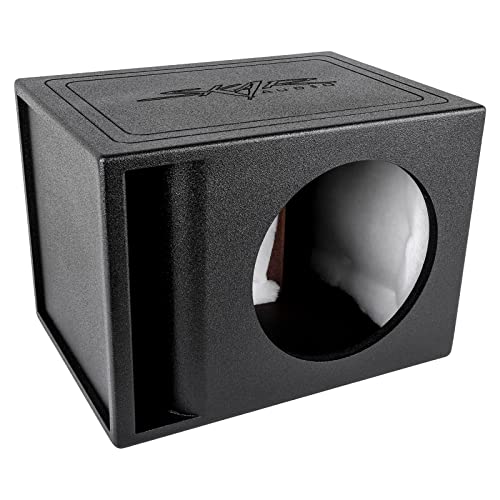
Skar AR1X12V kerf ported
Price varies, check the listingArmor coating and a kerf-cut port aimed at builders chasing durability and output in a single-12 enclosure, with a current listing worth checking for its exact stated volume.
Check price on AmazonFrequently asked questions
- How do I know if a prebuilt ported box will work with my subwoofer?
- Check the subwoofer manufacturer's spec sheet for its recommended ported enclosure volume and tuning frequency, then compare that range against the box's stated internal volume, not its outside dimensions. If the box does not publish an internal volume, there is no reliable way to confirm the match without contacting the seller, and buying on the assumption that a box just works is how a mismatch damages a driver.
- Why is ported louder than sealed for the same subwoofer?
- A ported box uses a tuned port opening to reinforce output around a chosen frequency, adding acoustic gain that a sealed box's fully closed air space cannot produce the same way. That gain is concentrated in a narrower band around the tuning frequency, which is why ported setups sound punchier in that range but roll off faster below it compared to a sealed box's broader, more even output.
- Can I put any 12-inch subwoofer in these boxes?
- No. Every box here is sized around whatever internal volume it was built for, which may or may not match a given driver's recommended range. Some listings publish that internal volume and some do not. Always compare a driver's manufacturer-recommended ported volume against the box's stated figure before buying, and skip any box that will not confirm its internal volume.
- What happens if the box volume is too small for the subwoofer?
- A ported box smaller than a subwoofer's recommended volume tends to restrict cone movement and can push excursion past safe limits right around the port's tuning frequency, the same range the box is asked to work hardest in. It often sounds boomy or strained rather than simply quieter, and sustained high-output use in an undersized ported box is a common way subwoofers fail.
- Is a kerf-cut port better than a round port tube?
- Kerf-cut and slot ports fit more port area into a smaller enclosure footprint than a round tube tuned to the same frequency, which is useful in a tight trunk. Round tubes are simpler to model and sometimes have lower turbulence noise at high excursion. Neither is universally better; the right choice depends on the internal volume available and how much output the build is chasing.
- Do I need to seal the box or does ported mean any air leak is fine?
- Ported enclosures still need to be airtight everywhere except the port opening itself. A leak anywhere else in the box changes the effective tuning and internal volume, which throws off the response the box was designed to produce. Check the terminal cup, any driver gasket, and every seam with a bead of silicone or adhesive caulk before considering the install finished.
Researched guidance, not professional advice. Confirm a box's stated internal volume against your subwoofer's own recommended ported range before buying, and when a listing will not state that number, treat that as a reason to keep looking rather than a detail to skip.