Subwoofers
12 Inch vs 15 Inch Subwoofer: Which One Should You Run?
Researched from published physics, alignment relations and manufacturer specifications. Updated .
Quick answer
Stepping up from a 12 inch subwoofer to a 15 is a real jump in cone area, not a minor upgrade, and it comes with a real jump in the box volume needed to support it. The larger driver's advantage is genuine physics: more radiating surface moves more air at the same excursion, which generally supports more output and, in many designs, lower distortion at a given target level because the cone does not have to travel as far. The cost is equally real: a 15 inch box takes up noticeably more depth and footprint than a 12 inch box, and not every vehicle has room to spare.
This comparison lays out the cone area difference, the box volume tradeoff, and where a 15 inch driver's extra headroom is worth the space it demands, versus where a well-built 12 inch system gets the job done without the extra bulk.
Does a 15 inch subwoofer really move that much more air?
On representative effective cone area, yes, by a wide margin. A 15 inch driver's effective cone area is roughly 132.7 square inches compared to about 81.7 square inches for a 12 inch driver, over 60 percent more radiating surface. That difference generally means the 15 can produce a given amount of low-frequency output at less excursion than the 12 would need for the same result, which tends to show up as more headroom before the cone runs out of usable travel and as somewhat lower distortion at high output levels, depending on the specific drivers being compared.
These are representative, conventional figures for planning purposes. The actual Sd for any given 15 or 12 inch model is published on its own spec sheet and should be used for any calculation that depends on the exact number.
Head to head
| Characteristic | 12 Inch | 15 Inch |
|---|---|---|
| Effective cone area (representative) | About 81.7 sq in | About 132.7 sq in |
| Typical sealed box volume | 1.0 to 1.75 cu ft, driver dependent | Noticeably larger, driver dependent |
| Install depth and footprint | Moderate | Larger, needs more mounting depth |
| Output headroom at a given excursion | Lower | Higher |
| Common RMS power range across catalog | 500 to 3,000 watts | 1,000 to 2,000 watts and up |
Convention Source: Cone area figures are representative conventions; box volume and power ranges vary by the specific driver model.. A 15 inch driver's recommended net volume comes from its own manufacturer spec sheet, not from scaling up a 12 inch figure.
A bigger cone still needs the box it was designed for
Never assume a 15 inch box is simply a scaled-up 12 inch box. Larger drivers generally carry heavier moving assemblies and different suspension compliance, so their recommended net volume does not scale in a simple proportion from a smaller driver in the same product line. Building a box based on a guessed ratio rather than the 15 inch driver's own published enclosure recommendation risks an alignment that is either too stiff or too loose for that specific motor and suspension, which shortens the driver's life and hurts the output the larger cone was supposed to deliver.
The real cost of stepping up to 15 inch
The cone area gain is only useful if the vehicle can actually house the box a 15 inch driver needs. These enclosures commonly run noticeably deeper and wider than a comparable 12 inch box, since both the driver's mounting depth and its recommended net volume increase together. In a compact trunk, an SUV cargo area with a false floor, or any install where cargo capacity still needs to be usable day to day, that extra volume can be the deciding factor even when the output numbers favor the 15.
Run the sealed box volume calculator or ported box volume calculator with the specific 15 inch driver's published figures before assuming it will fit the same footprint as an existing 12 inch box, and check the box dimensions calculator against the vehicle's actual available cargo space.
When 12 inch is still the smarter call
A well-matched 12 inch driver in a correctly sized box, driven with adequate power, closes a meaningful part of the output gap a 15 inch driver would otherwise open up, and it does so in a box that fits far more vehicles without compromise. For a daily-driven car, a moderate output goal, or any install where cargo space genuinely matters, a strong 12 inch driver is frequently the more practical answer, with the 15 reserved for builds where maximum low-end output is the stated priority and the space to support it already exists.
Who should buy which
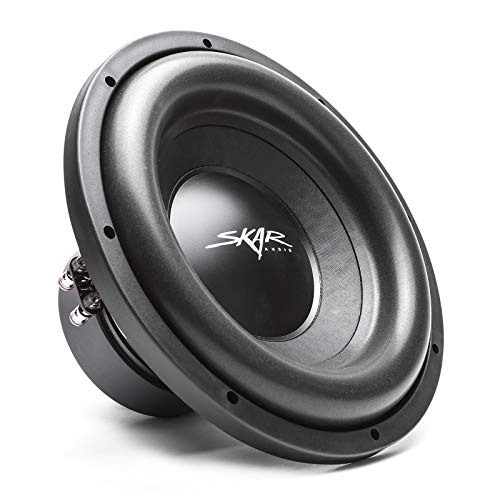
Skar Audio SDR-12 D4
Price varies, check the listingA 12 inch driver for builds where box size and install depth matter as much as output, giving strong performance in a more common enclosure footprint.
Check price on Amazon
Skar Audio SDR-15 D2
Price varies, check the listingA 15 inch driver for builds prioritizing maximum cone area and output headroom, where the vehicle has the cargo depth to support its larger box.
Check price on Amazon
Rockville W15K9D2
$159.95A 15 inch driver with a stated 1,250 watt RMS CEA rating, useful when the power budget for a 15 inch build needs a clearly documented handling figure.
Check price on Amazon
Skar Audio VXF-12 D4
Price varies, check the listingA second 12 inch option for builds chasing higher output from the smaller size before committing to the box volume a 15 inch driver demands.
Check price on AmazonFrequently asked questions
- How much louder is a 15 inch subwoofer than a 12?
- On representative cone area, a 15 inch driver has over 60 percent more effective radiating surface than a 12 inch driver, which generally supports more output at the same excursion. Actual loudness also depends on the specific driver's power handling, the box it is loaded into, and the amplifier power available, so the size gap alone does not set the final SPL.
- Does a 15 inch subwoofer need a much bigger box than a 12?
- Yes, typically. A 15 inch driver's recommended net volume is generally larger than a comparable 12 inch driver's, and the mounting depth is greater as well, so the enclosure takes up noticeably more space. The exact volume comes from the specific driver's manufacturer spec sheet rather than a fixed ratio from the 12 inch figure.
- Is a 15 inch subwoofer harder to install than a 12?
- It can be, mainly because of the larger box and the deeper mounting depth the driver itself needs. Some vehicles with shallow cargo floors or tight trunk openings cannot comfortably fit a properly sized 15 inch enclosure, which makes a 12 inch driver the more practical choice regardless of the output difference on paper.
- Can a 12 inch subwoofer sound as loud as a 15 with the right box and power?
- A well-matched 12 inch driver with a correctly sized box and adequate power can get closer to a 15 inch driver's output than the raw cone area numbers suggest, especially if the 15 inch comparison is under-powered or poorly boxed. The 15 still holds a real cone area advantage at equal excursion, but install quality on the 12 narrows the practical gap.
- What vehicles are best suited to a 15 inch subwoofer?
- Vehicles with deeper cargo areas, such as larger SUVs, trucks with a dedicated subwoofer box, or vans, generally suit a 15 inch driver better because they have the space for its larger recommended enclosure. Smaller sedans and hatchbacks more often favor a 12 inch or 10 inch driver simply because the cargo depth cannot support a 15 inch box comfortably.
Researched guidance, not professional advice. Cone area and box volume figures here are representative conventions for planning purposes. Confirm the exact recommended net volume, mounting depth and power handling on the specific driver's own manufacturer spec sheet before building or buying an enclosure.