Wiring
How to Wire Two Subwoofers to Your Amplifier
Researched from published physics, alignment relations and manufacturer specifications. Updated .
Quick answer
Wiring two subwoofers is simple math once the naming convention makes sense, but the naming convention is exactly where most confusion starts. A dual voice coil subwoofer is labeled by the resistance of one single coil, not the resistance the sub presents once both coils inside it are wired together, and that distinction changes every calculation that follows.
This guide covers how dual voice coil naming works, the specific wiring combinations available with two matching subs, and why checking your amplifier's stable impedance rating before you finish wiring matters more than any other step in the process. Run your own numbers through the subwoofer wiring calculator to confirm before you commit to a wiring scheme.
What does D4 or D2 actually mean on a subwoofer?
D4 means dual voice coil, 4 ohms per coil, and D2 means dual voice coil, 2 ohms per coil. The number describes one single coil inside the subwoofer, not the impedance the subwoofer presents to the amplifier once its two coils are wired together. This is the single most common point of confusion in subwoofer wiring, and it matters because a D4 sub wired by itself never presents 4 ohms to the amp. Wiring its two 4-ohm coils in parallel gives 2 ohms, and wiring them in series gives 8 ohms, but a straight 4-ohm load from a single D4 sub on its own is not one of the options.
The same logic applies to a D2 sub: its two 2-ohm coils give either 1 ohm in parallel or 4 ohms in series, never a plain 2-ohm load by itself.
What final impedances are possible with two D4 subwoofers?
| Wiring method | Per-sub coil wiring | Final impedance to the amp |
|---|---|---|
| Coils in series, subs in parallel | Each sub's coils wired in series (8 ohms per sub) | 4 ohms |
| Coils in parallel, subs in series | Each sub's coils wired in parallel (2 ohms per sub) | 4 ohms |
| Coils in parallel, subs in parallel | Each sub's coils wired in parallel (2 ohms per sub) | 1 ohm |
| Coils in series, subs in series | Each sub's coils wired in series (8 ohms per sub) | 16 ohms |
Published figure Source: Ohm's law for series and parallel circuits. Two D4 subs can reach 1, 2, 4, 8, or 16 ohms total depending on the exact combination chosen, with 1 and 4 ohms being the two most commonly used final loads.
How do you check if the final impedance works with your amplifier?
Confirm the amplifier's stable impedance rating before finishing any subwoofer wiring. A load below what the amplifier is rated stable at is a common way amplifiers fail, since the amp draws far more current than it was designed for and overheats. Check the spec sheet for a rating like '1-ohm stable' or '2-ohm stable' and match your wiring to that number, not below it.
What about two D2 subwoofers instead of D4?
The same logic applies, just shifted down. A single D2 sub's coils give 1 ohm in parallel or 4 ohms in series. Two D2 subs wired coils-in-series, subs-in-parallel land at 2 ohms, and coils-in-parallel, subs-in-series also land at 2 ohms. Wiring both subs fully in parallel drops to 0.5 ohms, which very few amplifiers are rated to handle safely, and wiring both fully in series climbs to 8 ohms. D2 subwoofers give you access to lower final impedances with fewer subs, which is why they are common in single-sub or dual-sub setups aiming for a 1-ohm or 2-ohm final load on an amplifier built for it.
What you need

Skar Audio SDR-12 D4
Price varies, check the listingA pair of matching D4 12-inch subs gives straightforward access to the common 1-ohm or 4-ohm final wiring options.
Check price on Amazon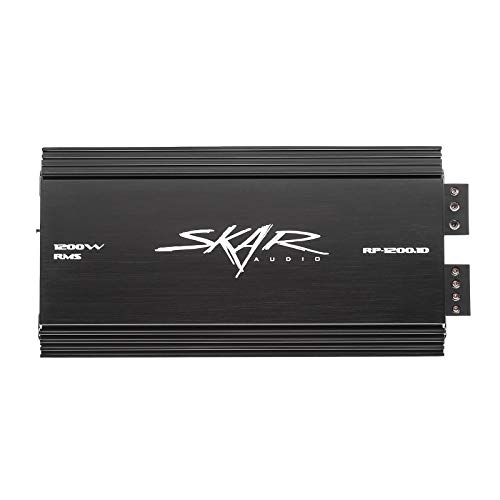
Skar Audio RP-1200.1D
Price varies, check the listingA 1-ohm stable amplifier lets you wire two D4 subs coils-in-parallel, subs-in-parallel for the lowest available impedance and the most current the amp can deliver.
Check price on Amazon
DS18 AMPKIT4
$54.95A 4-gauge amp kit is sized correctly for a dual-subwoofer system pulling significant current at a low final impedance.
Check price on Amazon
DS18 16 gauge ultra flex, 100 ft
$14.95Speaker wire run from the amp or distribution point to each individual subwoofer voice coil, sized for the distance inside a typical trunk or hatch.
Check price on AmazonHow do you wire the coils and the subs step by step?
Start by deciding your target final impedance based on what the amplifier is rated stable at, then work backward to the coil wiring that gets you there using the table above. Wire each subwoofer's own two coils together first, either in series (positive to negative between the coils) or in parallel (positive to positive, negative to negative), matching the per-sub result the table calls for.
Once each sub is wired internally, connect the two subwoofers to each other, again either in series or in parallel, to reach the final combined impedance. Run speaker wire from the amplifier's output to the first connection point, and keep the polarity consistent across every connection, since a single reversed coil will have the two subs fighting each other and canceling bass output instead of combining it.
Common mistakes when wiring two subwoofers
The most common mistake is confusing a subwoofer's D4 or D2 label with its actual final impedance, and wiring based on the label number instead of working through the coil math. A close second is wiring two subs to an impedance below the amplifier's rated stable load, either by mistake or by assuming lower impedance always means louder, when it actually means the amplifier works harder and risks overheating or shutting down. Also check polarity carefully at every connection point, since a reversed coil on just one sub in a multi-sub setup causes phase cancellation that is easy to blame on the wrong part of the system.
Frequently asked questions
- What does D4 mean on a subwoofer?
- D4 means dual voice coil, 4 ohms per coil. The number refers to one single coil inside the subwoofer, not the load the subwoofer presents on its own. A D4 sub's two coils wire to either 2 ohms in parallel or 8 ohms in series, and a plain 4-ohm load from a single D4 sub by itself is not possible.
- Can I wire two D4 subwoofers to a 2-ohm final load?
- Yes. Wire each subwoofer's coils in parallel to get 2 ohms per sub, then wire the two subs together in series, which combines back to a 4-ohm final load, or wire them in parallel from that stage for a 1-ohm final load. A straight 2-ohm final result with two D4 subs comes from a specific combination, not just any parallel wiring.
- What happens if I wire subwoofers to a lower impedance than my amplifier is rated for?
- The amplifier draws far more current than it was designed to handle, which causes it to run hot, distort, go into protection mode, or fail outright depending on the design. A load below the amp's rated stable impedance is one of the most common causes of amplifier damage, so always confirm the final wiring result against the amp's spec sheet first.
- Should I choose D2 or D4 subwoofers for a two-sub setup?
- It depends on the final impedance you want and what your amplifier is rated stable at. D2 subs reach lower final impedances, like 1 or 2 ohms, more easily with fewer wiring combinations, while D4 subs land more naturally around 4 ohms in common configurations. Match the sub's coil rating to the impedance your amplifier handles best.
- Do both subwoofers need to be identical for this wiring to work?
- Yes, for predictable results. Matching subwoofers with the same coil impedance, same power handling, and ideally the same model ensure the final calculated impedance is accurate and that both subs share the amplifier's output evenly. Mismatched subs can still be wired together, but the math gets more complex and one sub may end up overpowered or underpowered relative to the other.
- Can I mix a D2 subwoofer and a D4 subwoofer in the same wiring setup?
- It is possible but not recommended for most installs. The differing coil impedances make it harder to reach a clean final impedance, and the mismatched electrical characteristics mean the two subs will not draw power evenly from the amplifier. Matching subwoofers keep both the math and the real-world performance predictable.
Researched guidance, not professional advice. Impedance ratings and stability vary by amplifier model, and running a load your amplifier is not rated for can cause damage. Always verify against your specific amplifier's documented stable impedance before finishing a wiring scheme.