Subwoofers
Kicker Comp 10 Review
Researched from published physics, alignment relations and manufacturer specifications. Updated .
Quick answer
This review was compiled from Kicker's published documentation for the Comp 10 and the consensus of verified owner reviews across retailers and car audio forums. Nobody on our team installed, measured, or listened to this subwoofer in a vehicle. This is a researched review, and where Kicker has not published a specific figure in the materials we reviewed, that is stated plainly rather than filled in with an estimate.
The Comp 10 is a single 4 ohm 10 inch driver, which makes it one of the simplest subwoofers on the market to wire: there is no parallel-versus-series decision to make, since a single voice coil only ever presents one impedance to the amplifier. What sets this driver apart in Kicker's lineup, and among budget 10 inch subs generally, is that Kicker's owner manual for this exact model includes recommended sealed and vented enclosure volumes, a level of documentation that is genuinely unusual at this price.
What are the published specifications?
| Specification | Value |
|---|---|
| Nominal size | 10 inch |
| Voice coil configuration | Single 4 ohm |
| Wireable final impedance | 4 ohm (only configuration available on a single driver) |
| Manufacturer max power | Not restated here; see the Kicker owner manual and spec sheet |
| CTA-2006 RMS rating | Not restated here; see the Kicker owner manual and spec sheet |
| Frequency response | Not restated here; see the Kicker owner manual and spec sheet |
| Recommended sealed enclosure volume | Published by Kicker in the Comp 10 owner manual |
| Recommended vented enclosure volume | Published by Kicker in the Comp 10 owner manual |
Published figure Source: Manufacturer published specifications and owner manual. Kicker publishes exact sealed and vented enclosure volumes for the Comp 10 in its owner manual, which is unusual at this price point. Confirm the current figures directly against that manual and against the spec page before building a box, since this table does not restate the exact cubic footage.
Why does a published box volume matter more than a power rating here?
A subwoofer's real-world output depends heavily on being installed in the correct enclosure volume, arguably more than it depends on any power rating printed on the box. A driver run in the wrong size sealed or vented enclosure will sound worse and can suffer excessive excursion damage even if it is wired and powered exactly as intended.
That is what makes the Comp 10 notable: instead of forcing a builder to fall back on a generic convention range for a 10 inch driver, Kicker's own owner manual gives sealed and vented volumes specific to this exact model. Use those manufacturer numbers directly rather than a broad rule of thumb, and confirm them at the Comp 10 spec page before cutting any wood.
Who should buy the Comp 10, and who should not?
This driver fits a builder who wants the simplest possible subwoofer wiring job, a single 4 ohm coil with no series or parallel decision, paired with a manufacturer-documented box that removes the guesswork of sizing an enclosure. That combination makes it a strong candidate for a first subwoofer install where confidence in the enclosure matters as much as the driver itself.
It is a poor fit for a builder who wants the flexibility of a dual voice coil, since a single 4 ohm driver only ever presents 4 ohms to the amplifier and cannot be reconfigured to a lower impedance for more power without adding a second subwoofer. It is also not the choice for someone chasing high-power SPL builds, since Kicker's Comp line is positioned as a daily-driver upgrade rather than a competition driver.
What enclosure does the Comp 10 need?
Use Kicker's own published sealed and vented volumes for the Comp 10, not a generic 10 inch convention range. Kicker documents both enclosure types specifically for this model in its owner manual, which is more precise than the typical 10 inch convention of roughly 0.6 to 1.0 cubic feet sealed or 1.1 to 1.75 cubic feet ported. Pull the exact figures from Kicker's current manual and from the Comp 10 spec page, then confirm your cut list with our sealed box volume calculator or ported box volume calculator.
How much amp and fuse does this subwoofer need?
Because the Comp 10 is a single 4 ohm driver, it pairs simply with a mono amplifier stable at 4 ohms, and there is no wiring configuration decision to make the way there is with a dual voice coil driver. Match the amp's own documented RMS output to your power goals rather than assuming a specific figure for the sub, and check Kicker's current spec sheet for the driver's own power handling before finalizing an amp.
Once you know the amplifier's real RMS output, size your power wire and inline fuse using the convention that a class D amp draws current at roughly RMS watts divided by the product of 80 percent efficiency and 14.4 V. Our amp fuse calculator turns that RMS figure into a wire gauge and fuse rating once you have the amp's documented output in hand.
What do owners say?
Kicker's Comp line has a long track record among daily-driver owners, and verified reviews of the Comp 10 commonly mention the ease of a single 4 ohm wiring job as a reason they chose it for a first system. Owners frequently cite the published enclosure guidance as a practical advantage, since it removes one of the more error-prone parts of a first subwoofer build.
The more common comments from owners describe the Comp 10 as suited to a moderate daily-driver bump in bass rather than a loud, SPL-focused build, which is consistent with its position in Kicker's lineup as an entry to mid-tier driver rather than a competition subwoofer.
What else to consider

Pioneer TS-A25S4
$64.81Another single 4 ohm 10 inch driver with equally simple wiring, for shoppers comparing beyond Kicker's Comp line.
Check price on Amazon
Pioneer TS-A250D4
$99.98A dual 4 ohm 10 inch driver for builders who want the option to wire down to 2 ohms later.
Check price on Amazon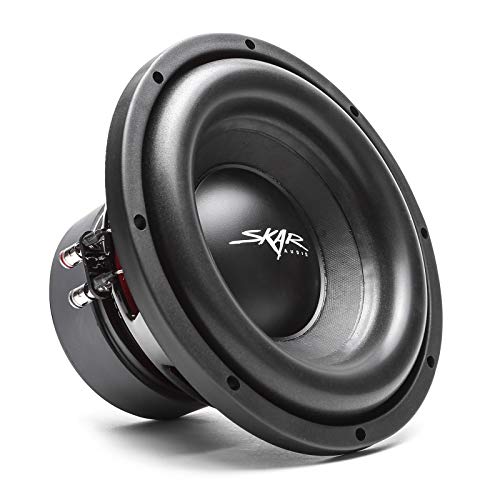
Skar Audio SDR-10 D2
Price varies, check the listingA dual 2 ohm 10 inch driver for builders who want more current draw and output than a single 4 ohm coil allows.
Check price on AmazonFrequently asked questions
- Does the Kicker Comp 10 come with a recommended box size?
- Kicker publishes recommended sealed and vented enclosure volumes for the Comp 10 specifically in its owner manual, which is unusual documentation at this price. Use those manufacturer figures directly rather than a generic 10 inch convention range, and confirm the current numbers against Kicker's manual and spec sheet before building.
- Can the Comp 10 be wired to 2 ohms?
- No. The Comp 10 uses a single 4 ohm voice coil, which only ever presents 4 ohms to the amplifier. Reaching a 2 ohm final load would require a driver with a dual voice coil configuration, or adding a second single 4 ohm subwoofer wired in parallel with this one.
- Is the Kicker Comp 10 a sealed or vented subwoofer?
- It can be built into either type of enclosure, since Kicker publishes both a sealed and a vented recommended volume for this exact model in its owner manual. A sealed box gives tighter, more forgiving bass, while a vented box tuned to Kicker's published frequency produces more output per watt.
- Is a single 4 ohm subwoofer easier to wire than a dual coil sub?
- Yes. A single voice coil driver like the Comp 10 only presents one impedance to the amplifier, so there is no series-versus-parallel wiring decision to make. A dual voice coil driver needs that decision made correctly, which is one more step where a first-time builder can make a wiring mistake.
- Who should skip the Kicker Comp 10?
- Builders who want the flexibility to rewire a subwoofer to a lower impedance for more power later should look at a dual voice coil driver instead, since the Comp 10's single 4 ohm coil is fixed. SPL-focused builders chasing competition-level output should also look further up Kicker's lineup or at a dedicated high-power driver.
Researched guidance, not professional advice. This review is compiled from manufacturer published specifications and verified owner reviews, not hands-on testing. Always disconnect the battery before running power wire, mount the main fuse within 18 inches of the battery positive terminal, and use a grommet anywhere wire passes through sheet metal. Sustained high SPL causes permanent hearing damage, so protect your hearing during setup and tuning.