Reference
SPL vs Power Chart: Sensitivity, the 3 dB Rule, and Cabin Gain
Researched from published physics, alignment relations and manufacturer specifications. Updated .
Quick answer
Sound pressure level from a subwoofer is not a mystery number pulled from a dyno chart; it follows directly from two published inputs, the driver's sensitivity rating and the power actually reaching it, through a logarithmic relationship. SPL equals sensitivity plus 10 times the base-10 logarithm of the power in watts, referenced to the driver's rated 1 watt figure. That relationship is why power increases feel like diminishing returns: going from 100 to 200 watts adds 3 dB, but going from 1,000 to 1,100 watts adds barely a quarter of a decibel, because it is the ratio of power that matters, not the raw wattage added.
This chart works out SPL for representative sensitivity figures across common driver sizes, breaks out the doubling rules everyone building a loud system should have memorized, and separates the one factor that genuinely is not predictable from a formula: cabin gain. Check your own numbers against the SPL calculator once you know a driver's actual published sensitivity.
How loud does a subwoofer get at a given RMS power?
The table below uses representative single-driver sensitivity figures for 10, 12, and 15 inch subwoofers and applies the SPL formula across a range of RMS power levels. Sensitivity is normally measured at 1 watt and 1 meter, so treat these as anechoic, single-driver reference points before real-world factors like cabin gain and multiple drivers are added.
| RMS watts | 10 in (84 dB sens.) | 12 in (85 dB sens.) | 15 in (87 dB sens.) |
|---|---|---|---|
| 1 W | 84.0 dB | 85.0 dB | 87.0 dB |
| 10 W | 94.0 dB | 95.0 dB | 97.0 dB |
| 25 W | 98.0 dB | 99.0 dB | 101.0 dB |
| 50 W | 101.0 dB | 102.0 dB | 104.0 dB |
| 100 W | 104.0 dB | 105.0 dB | 107.0 dB |
| 250 W | 108.0 dB | 109.0 dB | 111.0 dB |
| 500 W | 111.0 dB | 112.0 dB | 114.0 dB |
| 1000 W | 114.0 dB | 115.0 dB | 117.0 dB |
| 1500 W | 115.8 dB | 116.8 dB | 118.8 dB |
| 2000 W | 117.0 dB | 118.0 dB | 120.0 dB |
Published figure Source: SPL = sensitivity + 10 x log10(watts). Sensitivities are representative single-driver figures for comparison. Always check the actual driver's published sensitivity, which is usually rated at 1 watt / 1 meter half-space.
The doubling rules everyone should memorize
Because SPL follows a logarithmic power relationship, a handful of fixed ratios come up constantly and are worth knowing without recalculating every time.
| Power ratio | dB gain | Formula |
|---|---|---|
| 2x | 3.0 dB | 10 x log10(2) |
| 4x | 6.0 dB | 10 x log10(4) |
| 8x | 9.0 dB | 10 x log10(8) |
| 10x | 10.0 dB | 10 x log10(10) |
| 16x | 12.0 dB | 10 x log10(16) |
| 20x | 13.0 dB | 10 x log10(20) |
Published figure Source: SPL = 10 x log10(power ratio). Doubling power is always 3 dB, no matter the starting wattage. Ten times the power is 10 dB, which is roughly a perceived doubling of loudness to human hearing.
Stacking drivers adds SPL before any extra power
Running multiple identical drivers off the same signal adds output from combined radiating area alone, independent of any extra power per driver. This is separate from, and additional to, the power-based gains above.
| Driver count | Array gain |
|---|---|
| 1 | 0.0 dB |
| 2 | 3.0 dB |
| 3 | 4.8 dB |
| 4 | 6.0 dB |
Published figure Source: 10 x log10(driver count). This is acoustic summation from combined radiating area, not extra amplifier power. It stacks on top of whatever power-based SPL gain the amp itself provides.
Cabin gain: the number this formula cannot predict
Everything above assumes a driver playing into open space, but a car, truck, or SUV cabin is a mostly sealed pressure vessel at low frequencies, and that sealed volume reinforces bass below its own transition frequency. This effect, commonly called cabin gain, is frequently quoted somewhere in the 6 to 12 dB range, and it is real, but it is not something this formula, or any formula on this page, can calculate precisely, because it depends heavily on cabin volume, how well sealed the vehicle actually is, seat and material absorption, and where the tuning frequency and cabin's own transition point happen to line up.
Two identical systems in two different vehicles can see meaningfully different cabin gain, which is why an SPL number that impressed a friend in one car does not automatically carry over to a different vehicle with the same equipment. Treat published cabin gain figures as a general expectation, not a number to plan an electrical system or a box design around, and confirm actual in-cabin SPL with a meter once the system is installed rather than assuming a formula's output plus a generic cabin gain figure.
A smaller, tighter cabin, like a two-door coupe or a compact hatchback, tends to reinforce bass more than a large crew-cab truck or an SUV with a lot of open cargo volume behind the seats, simply because there is less air to pressurize and fewer gaps for that pressure to leak out of. Door seals, firewall gaps, and even a slightly open window can noticeably reduce cabin gain by giving low-frequency pressure somewhere to escape, which is part of why the same system can sound and measure differently from one day to the next if a door is not fully latched or a window is cracked during a test.
Hearing damage is real, and it does not heal
Sustained exposure above roughly 100 dB causes permanent hearing damage within minutes, and the damage does not heal. Low-frequency content feels less loud to human hearing than it actually measures, which is exactly what makes high-SPL bass systems dangerous: the ears do not send the same warning signal a loud midrange or treble source would at an equivalent measured level.
Gear for this

TopTes TS-501B sound level meter
$29.99A dedicated SPL meter turns the numbers on this chart from theory into an actual in-cabin reading, which is the only way to confirm cabin gain for a specific vehicle.
Check price on Amazon
Neoteck 30 to 130 dB meter
$21.99A compact SPL meter option for builders who want to track output changes across different power settings without a bulky handheld unit.
Check price on Amazon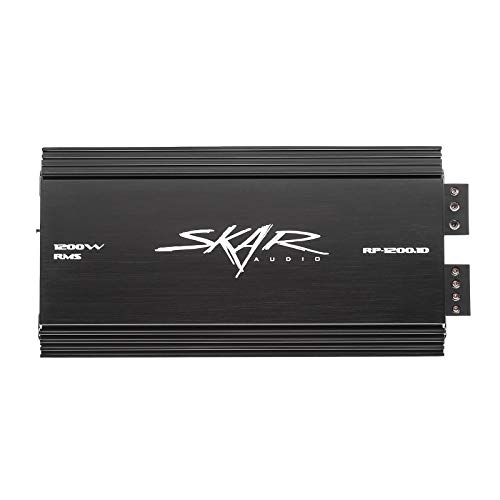
Skar Audio RP-1200.1D
Price varies, check the listingA mono amp with enough RMS output to move a driver from the lower rows of this chart into the 110-plus dB range shown at higher power levels.
Check price on AmazonFrequently asked questions
- Does doubling power really only add 3 dB?
- Yes, and it holds at every power level, from 1 watt to 2 watts or from 1,000 watts to 2,000 watts. The 3 dB figure comes directly from the logarithmic SPL formula, ten times the base-10 log of a power ratio of 2, which never changes regardless of the starting wattage.
- Why does 10 dB feel like double the loudness if it's not double the power?
- Ten times the power produces 10 dB of measured SPL increase, and human hearing perceives roughly a 10 dB increase as approximately doubled loudness, even though the actual acoustic power increased tenfold, not twofold. Perceived loudness and measured sound pressure level follow different scales, which is the source of this common mismatch.
- Do two subwoofers always add exactly 3 dB over one?
- Two identical subwoofers on the same signal and power add about 3 dB from combined cone area alone, before any extra power is factored in. This assumes both drivers are wired and powered identically; mismatched power per driver or different driver models will not produce a clean 3 dB gain.
- What is cabin gain and can I count on it?
- Cabin gain is the low-frequency reinforcement a sealed vehicle interior provides below its own pressure-vessel transition frequency, commonly quoted in the 6 to 12 dB range. It varies enormously by vehicle size and how well sealed the cabin is, so it is a general expectation rather than a number to design a system around.
- Is 115 dB in a car dangerous?
- Yes. Sustained exposure above roughly 100 dB can cause permanent hearing damage within minutes, and 115 dB is well past that threshold. Low-frequency bass in particular feels less loud than it measures, which makes it easy to underestimate the actual exposure level during tuning or demo sessions, so hearing protection is worth using even for a quick volume check in a closed cabin.
- Why do subwoofer sensitivity ratings vary between brands?
- Sensitivity depends on a driver's motor strength, cone mass, and Thiele-Small parameters, all of which differ by design and are not standardized in how every brand measures or reports them. Some manufacturers also measure at 1 watt / 1 meter in free space while others use half-space or in-box conditions, which can shift the published number without changing real-world output.
Researched guidance, not professional advice. Sustained SPL above roughly 100 dB causes permanent hearing damage within minutes, and low-frequency content feels less loud than it measures, which makes it easy to underestimate real exposure. Use hearing protection during tuning and demo sessions, and confirm in-cabin SPL with a meter rather than assuming this chart's formula output.