Subwoofers
Best 15 Inch Subwoofers for Car Audio
Researched from published physics, alignment relations and manufacturer specifications. Updated .
Quick answer
Fifteen inch subwoofers exist for one reason: maximum output per driver. They move more air per stroke than any smaller size, which means more low-frequency output for the same excursion, but that comes with real tradeoffs. A 15 needs a significantly larger enclosure than a 12, it demands more current and therefore a more serious electrical system to reach its potential, and a mis-sized box on a driver this large wastes a lot of both money and cargo space.
The picks below range from Skar's SDR line for builders who want a reasonably priced 15 for a daily-driven loud build, through Rockville and NVX drivers with genuinely published RMS figures, up to the EVL and American Bass HD15 for competition-focused builders who already understand what a 1 ohm final load demands of an amp and an electrical system.
This is also the size class where the gap between a casual loud build and a purpose-built SPL setup becomes most obvious. A single well matched 15 in a properly sized ported box, fed by an amp the electrical system can genuinely support, will out-hit two smaller subs run at the same total power in most cases, which is exactly why competitors gravitate toward this size rather than stacking multiple smaller drivers.
Before buying a 15, be realistic about your enclosure space and your electrical system's headroom. Run the numbers through our ported box volume calculator and alternator output calculator before you commit, since a 15 inch build that outgrows your electrical system will disappoint no matter how good the driver is.
How we chose these subwoofers
We did not install, listen to, or bench test any of these subwoofers ourselves. This comparison relies on manufacturer published specifications, CTA-2006 or CEA-2006 tested RMS ratings where a manufacturer provides one, and the consensus of verified owner reviews from competition and daily-driver communities. We specifically prioritized drivers with a genuine tested RMS figure over drivers that only publish a peak or max number, since at the 15 inch size the gap between marketing power and real power handling tends to be largest.
Where a driver is explicitly marketed for SPL competition rather than daily-driven use, we labeled it Expert rather than implying it is a good fit for a casual first build, since a 1 ohm final load and a competition-oriented driver both assume an experienced installer and a purpose-built electrical system.
What a 15 inch subwoofer demands from your box and your electrical system
A 15 inch driver needs a meaningfully larger enclosure than a 12, both in raw internal volume and in the outer panel dimensions required to hold that volume, so measure your cargo space before you buy rather than after. It also draws considerably more current at any given power level than a smaller driver, which means a 15 inch build run at real power almost always benefits from a Big 3 upgrade and, at the higher end, an upgraded alternator.
Use our Big 3 upgrade calculator and alternator output calculator to check whether your factory electrical system can actually support the amp a 15 inch driver like these deserves before you spend money on the subwoofer itself.
Specification comparison
| Subwoofer | Voice coil | Manufacturer max power | Tier |
|---|---|---|---|
| Skar Audio SDR-15 D4 | Dual 4 ohm | Manufacturer-rated, see listing | Beginner |
| Skar Audio SDR-15 D2 | Dual 2 ohm | Manufacturer-rated, see listing | Beginner |
| Rockville W15K9D2 | Dual 2 ohm | 1,250 W RMS (CEA-2006) | Intermediate |
| NVX VCW152 | See listing | 1,500 W RMS (published) | Intermediate |
| Skar Audio EVL-15 D4 | Dual 4 ohm | Manufacturer-rated, see listing | Expert |
| American Bass HD15 | Single 1 ohm (competition) | Manufacturer-rated, see listing | Expert |
Published figure Source: Manufacturer published specifications. The Rockville and NVX rows list genuine RMS ratings; the rest are manufacturer max or peak figures unless the listing states otherwise.
RMS vs peak power on 15 inch drivers: reading past the marketing number
RMS is the measured, sustained power rating; peak or max is a short-burst marketing figure. CTA-2006, and the closely related CEA-2006 standard, define a real testing procedure that some manufacturers voluntarily submit their drivers to, which is why a driver with a published CEA-2006 or CTA-2006 RMS rating is generally easier to trust and easier to pair with an amp than one that only advertises a max wattage. At the 15 inch size in particular, the spread between an unverified peak claim and a genuinely tested RMS number tends to be largest, so treat any max power figure as a ceiling, not a target.
Buying tips
- Prioritize a published CTA-2006 or CEA-2006 RMS rating over a max or peak number whenever one is available.
- Measure your cargo area before ordering; a 15 inch box is significantly larger than a 12 inch box for the same enclosure type.
- Budget for a Big 3 upgrade or an alternator upgrade if you plan to run a 15 inch driver at real power, since factory electrical systems are rarely sized for it.
- Confirm your amp is stable at the final impedance your wiring plan produces, especially for 1 ohm competition-style builds.
- Do not reuse a box volume from a different 15 inch driver; always use the specific model's own published spec sheet.
Wiring and power safety
Disconnect the battery before running power wire, and size the fuse to the wire, mounting it within 18 inches of the battery positive terminal. A fuse protects the wire from a short circuit, not the amp or the subwoofer, and any wire passing through sheet metal needs a grommet to prevent chafing. Sustained high SPL, which a 15 inch build is specifically designed to produce, causes permanent hearing damage, so use hearing protection during tuning and demo sessions.
The picks, by tier

Skar Audio SDR-15 D4
Price varies, check the listingA dual 4 ohm 15 inch driver that gives first-time big-sub builders an accessible entry point into the size class.
Check price on Amazon Skar Audio SDR-15 D2
Price varies, check the listingThe dual 2 ohm version of the same SDR line, useful if your amp is better matched to a lower final impedance.
Check price on Amazon
Rockville W15K9D2
$159.95Publishes a 1,250 watt CEA-2006 rated RMS figure, a genuinely tested number rather than a marketing peak, which makes amp matching far more reliable.
Check price on Amazon
NVX VCW152 v3
$259.99Publishes a 1,500 watt RMS figure, giving builders who want more sustained power a clear, documented target for amp selection.
Check price on Amazon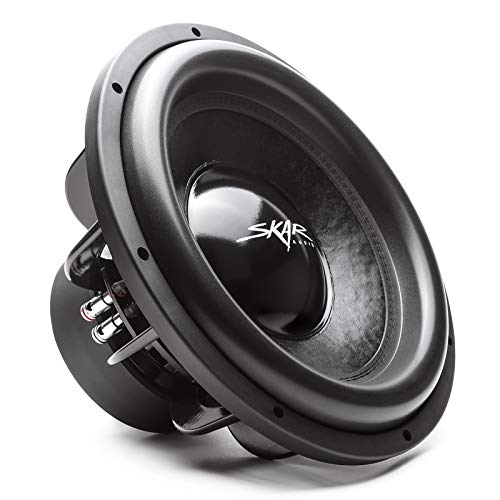
Skar Audio EVL-15 D4
Price varies, check the listingSteps up power handling for loud daily builds that have already outgrown the SDR line's headroom.
Check price on Amazon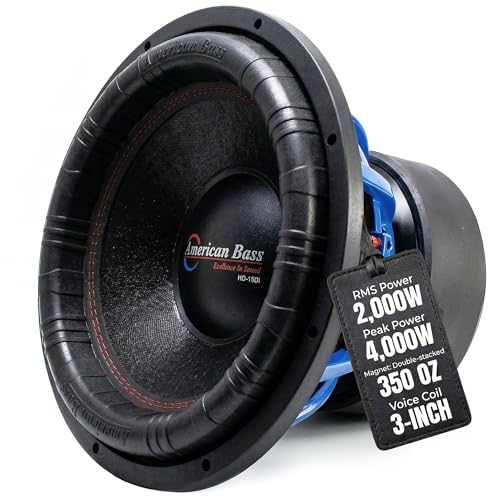
American Bass HD 15
$399.95A single 1 ohm competition-oriented driver built for SPL builds where the amp and electrical system are specifically sized for a very low final impedance.
Check price on AmazonFrequently asked questions
- Do I need a bigger amp for a 15 inch subwoofer than a 12?
- Generally yes, since 15 inch drivers are typically rated for higher power handling than 12 inch drivers and are chosen specifically to be run at higher power levels. Size the amp to the driver's RMS rating and confirm your electrical system can actually deliver that current before buying the amp.
- How much bigger is a 15 inch subwoofer box than a 12 inch box?
- It varies by specific driver and enclosure type, but a 15 inch box is meaningfully larger in both internal volume and outer panel dimensions than a comparable 12 inch box, often enough to change where it can physically fit. Always calculate the exact volume from the driver's own spec sheet rather than estimating based on cone size alone.
- What does CEA-2006 mean on a subwoofer spec sheet?
- CEA-2006, closely related to the current CTA-2006 standard, defines a specific testing procedure manufacturers can voluntarily submit a driver to in order to publish a verified RMS power rating. A driver carrying this rating is generally more trustworthy for amp matching than one that only lists an unverified peak or max wattage.
- Can I run a 15 inch subwoofer at 1 ohm safely?
- Only if both the subwoofer's voice coil configuration and your amp are specifically rated for a 1 ohm stable load, since not every amp can handle that current draw safely. Running an amp below its rated stable impedance risks overheating and damage, so confirm the amp's spec sheet explicitly lists 1 ohm stability before wiring a driver that low.
- Is a 15 inch subwoofer worth it for a daily-driven car?
- It can be, if you have the cargo space and are willing to invest in an electrical system upgrade to actually power it properly. For most daily drivers without those constraints, a 12 or 10 inch driver delivers a satisfying upgrade with less compromise on trunk space and electrical demands.
- Why do two 15 inch subs with similar prices have very different specs?
- Manufacturers target different use cases: some 15 inch drivers are built for efficient daily-driven loudness, while others are built specifically for SPL competition with different suspension stiffness and coil designs entirely. Compare the published RMS rating, sensitivity, and intended use case rather than assuming price alone reflects capability or performance.
Researched guidance, not professional advice. Keep the main fuse within 18 inches of the battery positive terminal, disconnect the battery before running power wire, and use a grommet anywhere wire passes through sheet metal. A fuse protects the wire, not the equipment behind it, and sustained high SPL causes permanent hearing damage, which matters most on a system this capable of producing it.