Expert build
A High Output Build, and Who Should Not Build It
Researched from published relations and manufacturer specifications. Updated .
Quick answer
A 4,000 watt system draws roughly 347 amps at 14.4 volts, which is more than twice what a stock alternator makes. The electrical system, not the subwoofers, is what this build actually is, and anyone not prepared to replace the alternator and rewire the charging path should build something smaller.
Read this part before the list. A build at this level is mostly an electrical project with subwoofers attached. The drivers and the amplifier are the easy part; the alternator, the charging path and the several hundred amps flowing through the vehicle are the build.
Who should not build this: anyone whose vehicle is a daily driver they cannot afford to have off the road, anyone not comfortable crimping 1/0 lugs properly, and anyone who has not already done a smaller system and learned what goes wrong. The budget ported build reaches genuinely loud for a fraction of this, and for most people it is the better answer.
The complete parts list
Grouped by function rather than by price, so you can see what each part of the system costs on its own. Every line links to the product, and the total is computed from catalog prices rather than typed by hand.
Bass
$569.96-
 NVX
NVXNVX VCW152 v3 x 2
A published 1,500 watt RMS rating rather than a peak figure, which is what an amplifier should be matched to.
-
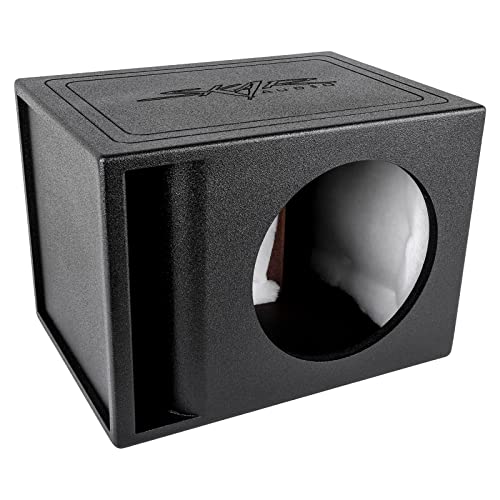 Skar Audio
Skar AR1X12V kerf ported
An armor coated kerf ported box as a starting point. At this level most builds are custom, built to the drivers published parameters.
Price varies Check price -

Amplification
$163.90-
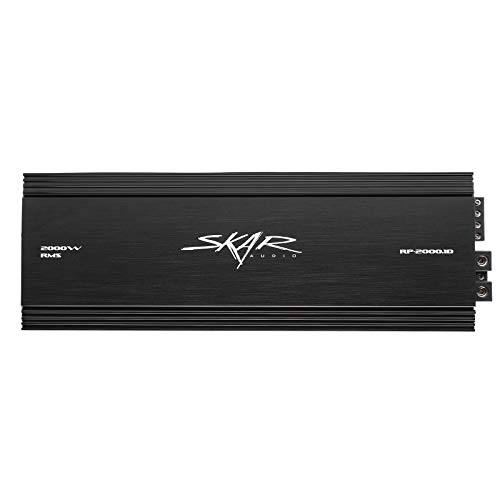 Skar Audio
Skar Audio RP-2000.1D x 2
Two monoblocks rather than one, so each driver gets its own amplifier and its own load.
Price varies Check price -
 STINGER
Stinger 17 ft Hyper-Flex
Directional shielding, which is the correct construction for a cable sharing a car with a 400 amp alternator.
-
 B2 Audio
B2 Audio 4v 10 channel
Ten output channels with a subsonic filter per zone, which is not optional on a ported build at this power.
The electrical system, which is the actual build
$1663.82-
 Mechman Alternators
Mechman 400A for 2014 to 2018 GM trucks
A 400 amp alternator. CHECK THE FITMENT LIST: this fits only certain listed GM trucks. A shorter serpentine belt is required.
-
 NVX
NVXNVX True Spec 1/0 100 percent OFC x 2
Two big 3 kits, because at this current every one of the three runs wants to be doubled.
-
 GEARit
GearIT 1/0 OFC set, 25 ft each
Twenty five feet each of 1/0 power and ground. The ground run is the one people undersize.
-
 XS Power
XS Power PS1200L x 2
Two deep cycle power cells rated for a 1,500 to 3,000 watt system each. Not starting batteries.
-
 RECOIL
Recoil BDB24 six way
A six way distribution block, fused per output so each amplifier run is protected by its own conductor rating.
-
 Skar Audio
Skar Pro Series inline ANL holder x 2
Pro series ANL holders. Fit the main fuse within 18 inches of the battery positive terminal.
Price varies Check price -
 Sky High Car Audio
Sky High copper lugs with heat shrink x 2
Twenty copper lugs with heat shrink. There are a great many connections in this build.
Tools, and these are not optional here
$199.72-
 Brileine
Brileine 10 ton hydraulic crimper
Hydraulic crimping. A hammer crimp on one of thirty connections at 300 amps is a resistance heater waiting to happen.
-
 Fluke
FlukeFluke 17B+ multimeter
Accurate current and voltage measurement, because at this level guessing is expensive.
-
 TOPTES
TopTes TS-501B sound level meter
A sound level meter, so you know what you are exposing yourself to.
Build total
$2597.4016 lines across 4 groups. 3 items returned no price from the catalog and are not included in this figure, so the real total is higher. Prices change often and are a guide only.
What you can skip
Telling you not to buy something is what makes the rest of this list worth reading. On this build, these are the things people add that are not earning their place.
- A capacitor. At 347 amps of draw, no capacitor on the market is doing anything measurable.
- A prebuilt box, in most cases. At this power the enclosure should be built to the drivers published parameters and braced far beyond what a retail box is.
- Rear fill. Nobody is listening to rear fill in this car.
What to upgrade first
When the budget comes back around, this is the order that gets the most for the money.
- A second alternator, if the vehicle supports one. It is the only real answer above about 5,000 watts.
- Bracing and a custom enclosure, which will do more than another hundred watts.
- Hearing protection. This is a genuine recommendation, not a joke.
Frequently asked questions
- How much current does a 4,000 watt system draw?
- About 347 amps at 14.4 volts, using an 80 percent class D efficiency assumption. That is more than twice what a stock alternator produces at cruising speed, and several times what it makes at idle. This is why the alternator and the charging path are the build rather than an accessory to it, and why a capacitor is irrelevant at this level.
- Do I need two alternators?
- At 4,000 watts, a single 400 amp unit that makes a useful share of its rating at idle is usually adequate, provided the charging path is doubled and the batteries are sized for the reserve. Above roughly 5,000 watts a second alternator becomes the only honest answer, and that requires a bracket kit and a vehicle that can accommodate it.
- Is this dangerous?
- The electrical side genuinely is if done badly. Several hundred amps through a poorly crimped lug will heat that connection until something catches, and an unfused conductor between the battery and a short will do it faster. Fuse every run at its conductor rating, crimp hydraulically, use grommets everywhere, and disconnect the battery for the whole build.
- Will this damage my hearing?
- Yes, if you sit in it at full output. Sustained exposure above roughly 100 dB causes permanent hearing loss within minutes, and a system like this exceeds that easily. Low frequency content feels less loud than it measures, which removes the natural warning. Competition operators wear protection and leave the vehicle during a run, which tells you what these levels really are.
Researched guidance, not professional advice. A car battery will deliver several hundred amps into a short without any drama at all. Fit the main fuse within 18 inches of the battery positive terminal, because that fuse protects the wire and the wire is what starts a fire. Disconnect the battery negative before running power wire, fit a grommet anywhere a cable passes through sheet metal, and keep cables away from steering, airbag and moving components. Sustained high sound pressure causes permanent hearing damage.
Build list
Get the parts list as a checklist
One email with the full build list, every part linked. Nothing else.
No spam. Unsubscribe whenever you like.