Beginner

CT Sounds
CT Sounds Tropo 12 D4
$129.99A dual 4 ohm 12 that wires to 8 or 2 ohms with one driver, which keeps the amplifier choice open.
Check price on AmazonPower calculator
Quick answer
SPL is sensitivity plus ten times the log of the power. An 85 dB subwoofer on 500 watts produces about 112 dB at one metre anechoic, and a sealed car interior typically adds another 6 to 12 dB below its transition frequency.
Result
Sustained exposure above roughly 100 dB causes permanent hearing damage in minutes, and the damage does not heal. A system that reaches these numbers is not one to sit inside at full output.
The formula
SPL = sensitivity + 10 x log10(watts) + 10 x log10(driver count)
This is an estimate of anechoic output, plus a cabin allowance that is a convention. It is NOT a competition score. A metered burp on a calibrated meter at the windscreen measures peak pressure at one point in a sealed vehicle and routinely reads far higher than this. Treat the number as a comparison between options rather than as a prediction.
The figures above are computed with these exact inputs: Driver sensitivity 85 dB at 1W/1m, Power per driver 500 W RMS, Number of drivers 1, Cabin gain 6 dB.
Some of these are published physics or manufacturer figures and some are conventions. They are not the same kind of number, so each one is labeled.
| Assumption | Kind | Where it comes from |
|---|---|---|
| SPL = sensitivity + 10 x log10(power) | Published figure | SPL = sensitivity + 10 x log10(power), the logarithmic power relation |
| Cabin Gain: 6 | Convention | Cabin gain: the low frequency reinforcement a sealed vehicle interior provides below its pressure-vessel transition. Figures between 6 and 12 dB are quoted. It varies enormously with vehicle size, sealing and frequency and is not a published specification |
Every card below is in the page source. The calculator re-ranks them against your numbers and marks anything that falls short of what you just calculated.
A dual 4 ohm 12 that wires to 8 or 2 ohms with one driver, which keeps the amplifier choice open.
Check price on Amazon
The cheapest dual 4 ohm 12 in this catalog from a brand that has published specifications.
Check price on Amazon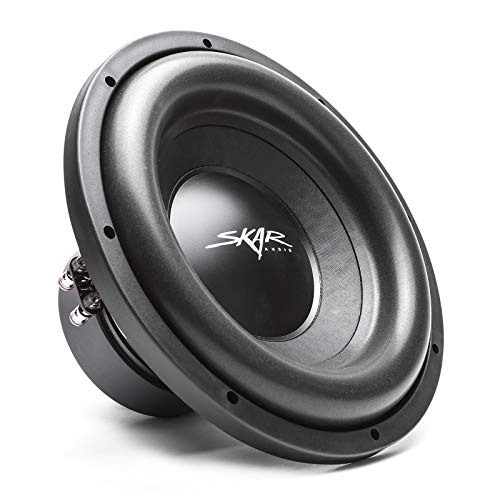
A 2.5 inch four layer coil and a published 22 Hz to 300 Hz response, which is the usual first real subwoofer.
Check price on Amazon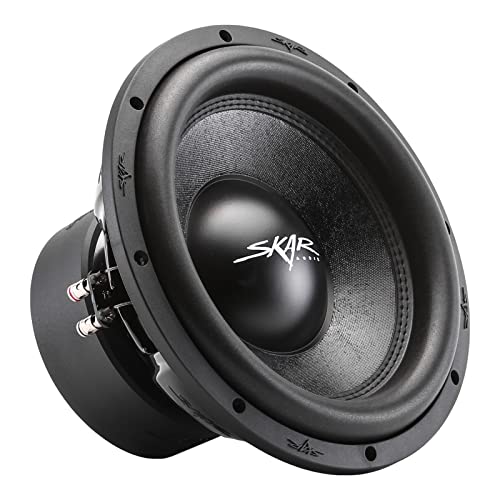
A step up in motor and excursion from the SDR at the same coil configuration, so an existing box often still suits it.
Check price on Amazon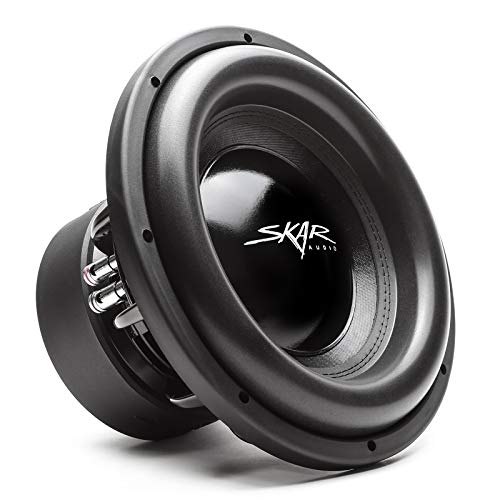
High excursion and a heavy motor, which means it wants a larger, properly braced box and real power behind it.
Check price on Amazon
A competition driver. Do not buy it unless the electrical system and the enclosure are already built for it.
Check price on AmazonResearched guidance, not professional advice. These results are planning figures from published relations and manufacturer specifications. Fit the main fuse within 18 inches of the battery positive terminal, because that fuse protects the wire and the wire is what starts a fire. Disconnect the battery before running power wire, use a grommet through every piece of sheet metal, and remember that sustained high sound pressure causes permanent hearing damage.