Subwoofers
Best 10 Inch Subwoofers for Car Audio
Researched from published physics, alignment relations and manufacturer specifications. Updated .
Quick answer
A 10 inch subwoofer is the size most people land on when they want a real, noticeable upgrade over factory bass without giving up much usable trunk or cargo space. It fits a smaller sealed box than a 12 or a 15, which makes it the practical choice for hatchbacks, compact sedans, and anyone who still wants to carry groceries and luggage without redesigning their whole trunk around a subwoofer box.
The picks below split into three tiers. Beginner picks use a single 4 ohm coil, which is the simplest possible wiring configuration for a single-sub system running off one amp channel. Intermediate picks move to dual 4 ohm coils for wiring flexibility as your system grows. Expert picks use dual 2 ohm coils, which let you reach a lower final impedance and draw more power from the same amp, assuming your amp is stable at that load.
Compared with a 12 inch driver, a 10 gives up a bit of maximum output for a meaningfully smaller box and an easier fit in a tighter trunk, which is exactly the tradeoff most daily-driven builds are happy to make. Compared with an 8 inch driver, a 10 moves more air per stroke while still fitting a reasonably compact enclosure, which is why it remains the single most common subwoofer size sold for cars and trucks with average-sized cargo areas.
Whatever you choose, confirm the enclosure volume against the specific driver's own spec sheet using our sealed box volume calculator, since a 10 inch box built for one brand's driver is rarely correct for another.
How we chose these subwoofers
We did not install or listen to any of these subwoofers ourselves. This list comes from manufacturer published specifications and the consensus of verified owner reviews across major retailers, forums, and car audio communities. We prioritized drivers from brands with a long enough track record that owner feedback is genuinely useful, and we noted plainly anywhere a manufacturer publishes only a peak or max figure instead of a CTA-2006 tested RMS rating.
Voice coil configuration was verified against each manufacturer's own listing, since getting this wrong leads directly to an amp mismatch. If you cannot find a driver's coil configuration clearly published, that is a red flag worth treating seriously before you buy.
Why a 10 inch subwoofer is the sweet spot for daily-driven cars
Ten inch drivers hit a genuinely useful middle ground: they need a noticeably smaller box than a 12 or 15, which matters if your vehicle has limited cargo space, but they still move meaningfully more air than an 8 inch driver. For someone who wants a real bass upgrade in a compact or mid-size car without giving up their trunk, a single 10 in a small sealed box is often the best practical compromise.
If your vehicle has essentially no spare cargo room at all, look at our best shallow mount subwoofers guide instead, since shallow drivers trade some output for a dramatically smaller footprint.
Specification comparison
| Subwoofer | Voice coil | Manufacturer max power | Tier |
|---|---|---|---|
| Pioneer TS-A25S4 | Single 4 ohm | Manufacturer-rated, see listing | Beginner |
| Kicker CompR10 | Single 4 ohm | Manufacturer-rated, see listing | Beginner |
| Pioneer TS-A250D4 | Dual 4 ohm | Manufacturer-rated, see listing | Intermediate |
| CT Sounds Bio 10 D4 | Dual 4 ohm | Manufacturer-rated, see listing | Intermediate |
| Skar Audio SDR-10 D2 | Dual 2 ohm | Manufacturer-rated, see listing | Expert |
| CT Sounds Bio 10 D2 | Dual 2 ohm | Manufacturer-rated, see listing | Expert |
Published figure Source: Manufacturer published specifications. Check each driver's own listing for its current CTA-2006 RMS rating before sizing an amp; ratings can change between production runs.
Single 4 ohm vs dual 4 ohm: which wiring fits your amp
A single 4 ohm coil is the simplest option: one positive and one negative terminal, wired directly to your amp's output at a 4 ohm load, with no decisions to make. It is the right choice if you are running exactly one subwoofer off one amp channel and never plan to add a second driver.
A dual 4 ohm coil gives you two positive and two negative terminals on the same driver, which you can wire in parallel for a 2 ohm final load or in series for an 8 ohm final load. That flexibility matters if you might add a second sub later, or if your amp is more stable and more powerful at 2 ohms than at 4. Run the numbers through our subwoofer wiring calculator before you commit to a configuration.
Buying tips
- Confirm the coil configuration against the amp you already own or plan to buy, since a mismatch here is the most common wiring mistake.
- Do not assume a 10 inch box size from one manufacturer works for a different brand's 10 inch driver; always use that specific model's published volume.
- Look for a CTA-2006 RMS rating over a max or peak number when comparing two similarly priced subs.
- If your vehicle has a small trunk, measure the enclosure's outer dimensions against your available space before ordering, not just the driver's mounting diameter.
- Pair the sub with an amp sized to its RMS rating, not its peak rating, and confirm wire gauge with our amp wire gauge calculator.
- If you are cross-shopping a 10 against a 12, remember the box volume difference before assuming the smaller driver will always be cheaper to build for; enclosure material cost scales with size too.
- Ask whether the specific listing includes a grille, since an exposed cone in an open trunk is more vulnerable to damage from cargo shifting around.
Wiring and power safety
Disconnect the battery before running any power wire. The main fuse belongs within 18 inches of the battery positive terminal and exists to protect the wire from a short circuit, not to protect the amp or the subwoofer itself. Route power wire through a grommet anywhere it passes through sheet metal, and keep in mind that sustained high SPL exposure causes permanent hearing damage.
The picks, by tier

Pioneer TS-A25S4
$64.81A single 4 ohm coil makes this the simplest possible first-subwoofer wiring job, with no decision to make about series or parallel wiring.
Check price on Amazon
Kicker Comp 10
$89.88Kicker's CompR line has a long track record with daily-driver owners looking for a straightforward single 4 ohm upgrade over factory bass.
Check price on Amazon
Pioneer TS-A250D4
$99.98The dual 4 ohm coil gives you the option to run it at 2 or 8 ohms later if you add a second sub or change amps.
Check price on Amazon
CT Sounds Bio 10 D4
$69.99A dual 4 ohm 10 inch driver that owners pair with a modest mono amp for a meaningful step up from a factory system.
Check price on Amazon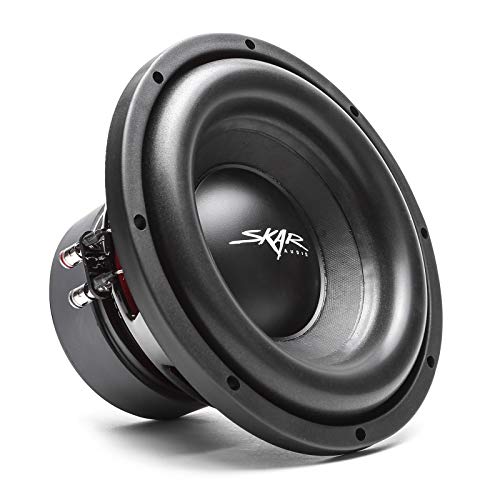
Skar Audio SDR-10 D2
Price varies, check the listingThe dual 2 ohm coil lets you wire down to a 1 ohm final load with two subs, drawing more power from an amp that supports it.
Check price on Amazon CT Sounds Bio 10 D2
$69.99A dual 2 ohm option for builders who want more current draw from a single 10 inch driver than a 4 ohm coil allows.
Check price on AmazonFrequently asked questions
- Is a 10 inch subwoofer loud enough for a daily driver?
- Yes, for most people. A single 10 inch subwoofer in a correctly sized sealed box, driven by a modestly powered mono amp, produces a substantial, noticeable upgrade over any factory system in nearly every vehicle. It will not match a competition-grade multi-15 build, but that is not the goal of a typical daily-driver setup anyway.
- Can I run two dual 4 ohm 10 inch subs on one amp?
- Yes, as long as your amp is stable at the resulting final impedance. Two dual 4 ohm subs can be wired to reach a 1, 2, 4, or 8 ohm final load depending on the series and parallel combination, so check your amp's rated stable impedance range before choosing a wiring scheme.
- What size box does a 10 inch subwoofer need?
- It varies by specific driver and by whether the box is sealed or ported, so there is no universal answer for every 10 inch sub. Always pull the recommended volume from that exact model's own manufacturer spec sheet and run it through a box volume calculator rather than reusing a number from a different subwoofer.
- Does a single 4 ohm subwoofer limit my amp options?
- It limits you to amps that are stable at a 4 ohm load with one subwoofer, which describes the vast majority of car audio mono amps on the market. It only becomes limiting if you later want to add a second subwoofer, since you cannot rewire a single coil driver to a different final impedance.
- Why do two 10 inch subs with the same wattage sound different?
- Sensitivity, frequency response, and enclosure design all affect perceived loudness and tonal character far more than a peak power number does. Two subs can share an identical max power rating on paper while performing very differently once actually installed in a box, which is why sensitivity and RMS ratings matter more than peak figures.
Researched guidance, not professional advice. Keep the main fuse within 18 inches of the battery positive terminal, disconnect the battery before running power wire, and use a grommet anywhere wire passes through sheet metal. A fuse protects the wire, not the amp or the subwoofer, and sustained high SPL causes permanent hearing damage, so protect your ears during setup and tuning.