Amplifiers
Best 5-Channel Car Amplifiers
Researched from published physics, alignment relations and manufacturer specifications. Updated .
Quick answer
A 5-channel amplifier combines what would normally be a 4-channel amp and a monoblock into a single chassis: four channels for speakers, plus a fifth, usually higher-power channel dedicated to a subwoofer. The appeal is obvious. One amplifier, one power wire, one ground, and one fuse instead of running two of everything through the firewall.
The tradeoff is that a 5-channel amp's total published RMS power is split across all five channels, so the subwoofer channel usually isn't as powerful as a dedicated monoblock at the same total wattage or price. This list sorts 5-channel amplifiers by tier and calls out published total RMS power where the manufacturer states it, so you can weigh convenience and simplicity against a two-amp setup with more headroom.
How we chose
We did not install, bench test, or listen to any of these amplifiers in a vehicle. This list is built from manufacturer-published total RMS power, how each brand documents the split between speaker channels and the subwoofer channel, and where each model sits within its own product lineup. We are not reporting independently measured output for any amplifier here.
Tiering weighs documented total power and channel-split transparency more heavily than brand name alone. A 5-channel amp that clearly states how much of its total RMS power goes to the subwoofer channel ranked ahead of one that only advertises a single combined number with no breakdown.
What a 5-channel amplifier replaces
Without a 5-channel amp, a full system with four speakers and a subwoofer typically needs a 4-channel amplifier for the speakers and a separate monoblock for the subwoofer. That means two power wires, two grounds, and two fuses run from the battery, plus more space needed for the install. A 5-channel amplifier consolidates all of that into one unit, one power feed, and one set of RCA inputs from the head unit.
The fifth channel is usually built with more current capacity than the other four, since it's meant for a subwoofer's higher power demand, but it draws from the same shared power supply as the speaker channels. That's the core tradeoff: convenience and a simpler install in exchange for a subwoofer channel that typically can't match a dedicated monoblock at a similar price.
Published total RMS power at a glance
| Amplifier | Published total RMS power | Tier |
|---|---|---|
| CT Sounds CT-800.5D | 1000W RMS total, 5 channels | Intermediate |
| NVX VAD1100.5 | 1100W RMS total, 5 channels | Expert |
Published figure Source: Manufacturer-published total RMS specifications. Total RMS power is split unevenly across five channels; the subwoofer channel typically carries a larger share than each individual speaker channel, but manufacturers don't always publish the per-channel breakdown.
Buying tips
- Look for a per-channel power breakdown, not just a total RMS figure, so you know what the subwoofer channel is actually rated to produce.
- Check the subwoofer channel's minimum stable impedance separately from the speaker channels, since it's usually the one channel built to run at a lower impedance.
- If your factory stereo has no RCA preamp outputs, confirm the amplifier includes high-level inputs before adding a separate line output converter.
- Size the main fuse with an amp fuse calculator based on the combined current draw of all five channels, since they share one power feed and one fuse.
- Use a wire gauge calculator sized to the amplifier's total current draw, not just the subwoofer channel's share of it.
- Set gain on each channel independently with a gain setting calculator, since the speaker channels and subwoofer channel need different settings.
One shared fuse, five channels
All five channels of a 5-channel amplifier typically share a single power wire and a single main fuse. That fuse needs to be sized to the combined current draw of every channel running at once, not just the subwoofer channel, and it belongs within 18 inches of the battery's positive terminal. Undersizing it to match only one channel's draw leaves the wire unprotected when the full system is playing.
Single amp versus 4-channel plus monoblock
A 5-channel amplifier's biggest advantage is simplicity: one power wire, one ground, one amplifier to mount, and one set of settings to dial in. For a daily-driven vehicle where trunk space and install time matter, that's a real benefit, and several of the picks above publish genuinely strong total RMS numbers for a single chassis.
A separate 4-channel amplifier paired with a dedicated monoblock amplifier generally gives more headroom on the subwoofer side, since the monoblock's entire power supply is built around that one low-impedance load instead of sharing capacity with four speaker channels. If your subwoofer goals are modest and you value a cleaner install, a 5-channel amp is a reasonable choice. If you want to push a subwoofer hard, the two-amp path usually has more room to grow.
The picks, by tier

Recoil RED1800.5
$189.99A straightforward 5-channel layout for a first all-in-one system, giving a simpler wiring job than running separate speaker and subwoofer amplifiers for a basic four-speaker-plus-sub build.
Check price on Amazon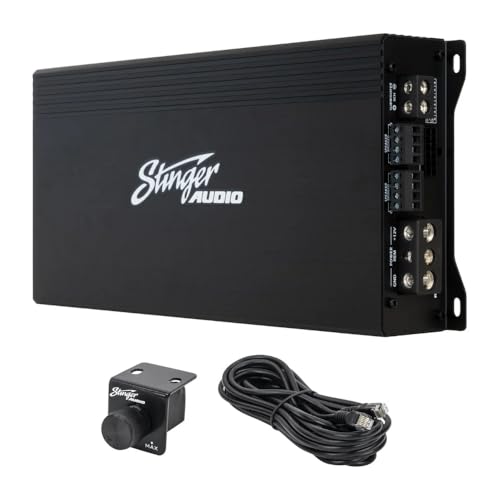
Stinger Audio MT-1000.5
$199.00A 5-channel design from a brand known for electrical components, suited to a daily-driven system that wants one amplifier handling both speakers and a subwoofer without extra complexity.
Check price on Amazon
CT Sounds CT-800.5D
$219.99Published at 1000 watts RMS total across all five channels, giving a documented number to weigh against how that power splits between four speaker channels and one subwoofer channel.
Check price on Amazon
AudioControl EpicFive
$269.00Built by a brand focused on signal processing as much as raw power, a good fit for a system that wants cleaner factory-integration features alongside its five channels of output.
Check price on Amazon
Pioneer GM-D9705
$398.77A flagship 5-channel design in Pioneer's lineup, aimed at a full system upgrade where both speaker power and subwoofer power need to be genuinely strong, not just adequate.
Check price on Amazon
NVX VAD11005 v2
$349.99The highest published total RMS figure in this list at 1100 watts, which matters most to anyone trying to get real subwoofer output out of a single 5-channel chassis.
Check price on AmazonFrequently asked questions
- What's the benefit of a 5-channel amp over a 4-channel and a separate monoblock?
- A 5-channel amplifier runs both your speakers and your subwoofer off a single chassis, which means one power wire, one ground, and one fuse instead of running two full sets. That simplifies the install and takes up less space, which matters in a smaller vehicle. The tradeoff is that the subwoofer channel typically has less headroom than a dedicated monoblock at a similar price point.
- How much power does the fifth channel actually put out?
- It depends on the amplifier, since manufacturers split total RMS power unevenly across the five channels and don't always publish the exact breakdown. The fifth channel is generally built with more current capacity than the four speaker channels because it's meant to drive a subwoofer, but it still draws from the same shared power supply, so check for a per-channel spec rather than assuming an even split.
- Can a 5-channel amplifier run two subwoofers?
- Yes, if the subwoofer channel is rated stable at the resulting impedance once both subwoofers are wired together, whether that's in series, parallel, or a dual voice coil combination. Check the fifth channel's minimum stable impedance on the spec sheet before wiring two subs to it, since running below that rating can cause the amplifier to overheat or shut down under load.
- What fuse size does a 5-channel amplifier need?
- The main fuse needs to be sized to the combined current draw of all five channels running together, since they typically share one power wire and one fuse. Use an amp fuse calculator with the amplifier's total rated current draw and your wire gauge to land on the right fuse size, and place it within 18 inches of the battery's positive terminal.
- Are 5-channel amps less powerful per channel than dedicated amplifiers?
- Generally yes, when compared dollar for dollar. Splitting one power supply across five channels usually means less total headroom than a dedicated 4-channel amp for speakers plus a separate monoblock for the subwoofer. A 5-channel amp trades some of that headroom for a simpler, more compact install, which is a reasonable tradeoff for many daily-driven systems.
- Do I need high-level inputs on a 5-channel amplifier?
- Only if your factory stereo doesn't have RCA preamp outputs to connect to. High-level, or speaker-level, inputs let the amplifier tap into the factory speaker wires directly instead of requiring a separate line output converter. If your head unit already has RCA outputs, high-level inputs aren't necessary, though having them doesn't hurt.
Researched guidance, not professional advice. This list reflects published manufacturer specifications rather than our own installs or bench tests. Confirm the per-channel power split, subwoofer channel impedance, and total current draw against your specific amplifier before wiring a system, and have a professional check the install if you're combining multiple subwoofers on one channel.