Tuning
Best Car Audio DSP Units in 2026
Researched from published physics, alignment relations and manufacturer specifications. Updated .
Quick answer
Wiring can get sound to every speaker in a car, but it cannot fix the fact that a driver's ear sits inches from a tweeter and several feet from a subwoofer in the trunk. A digital signal processor corrects for that by delaying the signal to closer speakers so every driver's output arrives at the listening position at the same moment, and by giving each channel its own crossover point instead of relying on whatever a passive crossover in a speaker set happened to ship with.
Time alignment and crossover control are where most of the real gain in car sound quality actually lives, more than swapping to a pricier speaker or adding another amplifier channel. The picks below range from simple four-output units built around a wired remote to full input-and-output processors meant for a complete active build. None of them substitute for correctly set amplifier gains, which still need to happen first, but once gains are right, a DSP is usually the single upgrade that moves a system from loud to actually good.
How we chose
We did not tune or listen to any of these processors ourselves. Picks are based on published input and output channel counts, EQ band count, and control method, whether a dedicated app, Bluetooth, or a wired remote, compared against what a typical two-way front stage plus subwoofer setup needs to run fully active. Competition-oriented units are noted as such rather than recommended as a first DSP purchase.
Why time alignment matters more than most upgrades
Every speaker in a car sits at a different distance from the listener. A driver's-side tweeter might be a foot away while a subwoofer in the trunk is six feet back, and sound from the farther speaker simply arrives later. That delay smears the stereo image and can cancel frequencies where the timing offset lines up badly between two speakers covering the same range. A DSP fixes this by adding a small, deliberate delay to the closer speakers so every driver's output reaches the listening position together.
Crossover points matter just as much. A passive crossover built into a component speaker set is a fixed compromise designed to work in a generic mounting location. A DSP lets each channel get its own high-pass and low-pass filter, tuned to where the speaker is actually mounted in that specific car, which is a bigger factor in how clean a system sounds than most equipment upgrades further up the signal chain.
Channel count and control method
| DSP | Inputs | Outputs | EQ bands | Control |
|---|---|---|---|---|
| Taramps PRO 2.4S | Not published | 4 | Not published | Wired remote |
| PRV Audio 24X | Not published | 4 | Not published | Wired remote |
| Banda X8 AIR | Not published | 8 | 79 | App / Bluetooth |
| PRV Audio 28X | Not published | 8 | Not published | App |
| Dayton Audio DSP-408 | 4 | 8 | Not published | PC software |
| Hertz SPL Show S8 | Not published | 8 | Not published | App, competition-tier |
Published figure Source: Manufacturer product listings as published. Input count matters for a fully active build fed by more than a single stereo signal; most car audio DSPs accept one stereo input and process it into many outputs.
Buying tips
- Count actual output channels needed: a simple 2-way front stage plus a subwoofer needs at least 5 outputs to run fully active, and more for a 3-way front stage.
- A higher EQ band count gives finer correction for room modes and speaker dips, useful once time alignment and crossovers are already dialed in.
- Bluetooth or app control makes on-the-fly adjustment easier from the driver's seat; a PC-only unit usually needs a laptop connected during setup.
- Check whether a unit has dedicated inputs, not just outputs, if the plan is a fully active setup fed by more than a stereo signal.
- Competition-tier units add finer control and more processing headroom, but a simpler 4 or 8 output DSP covers what most street systems need.
Set gains before touching the DSP
A DSP cannot fix a gain that is set by ear. Set amplifier gains properly before spending time on time alignment and crossover points, since an incorrectly set gain either clips the signal or leaves output on the table, and no amount of DSP tuning corrects for that upstream.
Passive crossovers vs a DSP's active crossovers
A passive crossover sits between the amplifier and the speaker and splits frequencies using fixed capacitors and inductors built for a general mounting scenario. A DSP's active crossover works earlier in the signal chain, before the amplifier, and lets each output channel get its own adjustable filter tuned to where that speaker actually sits in a specific car. Active crossovers also avoid the small power loss inherent in passive components, though they require an amplifier channel per driver rather than one channel feeding a full passive-crossed speaker.
Going active also opens up crossover slope choices, how sharply a filter cuts off unwanted frequencies, that a fixed passive network usually cannot offer. A steeper slope keeps a small tweeter further from frequencies it was never built to reproduce, which matters more as crossover points get pushed lower to ask more of a subwoofer or a midrange driver.
The picks, by tier

Taramps Pro 2.4S
$49.00A simple 4-output DSP with a wired remote, enough to add time alignment and dedicated crossovers to a basic front stage plus subwoofer without a steep learning curve.
Check price on Amazon
PRV Audio DSP 2.4X
$54.00Another accessible 4-output option from an established car audio brand, suited to a first DSP install on a straightforward two-way plus subwoofer setup.
Check price on Amazon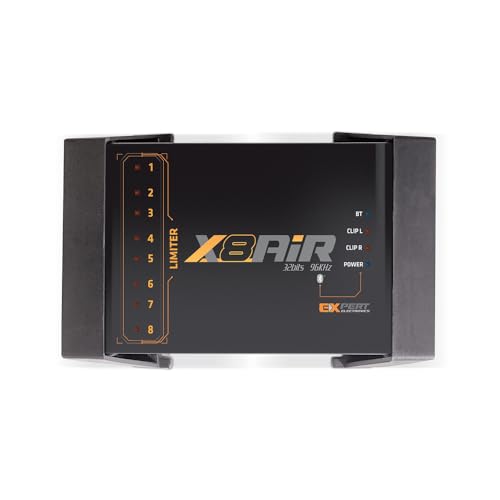
Banda X8AiR
$113.50Eight outputs, a published 79-band EQ, and app or Bluetooth control give enough range for a fully active build without a laptop tethered to the car.
Check price on Amazon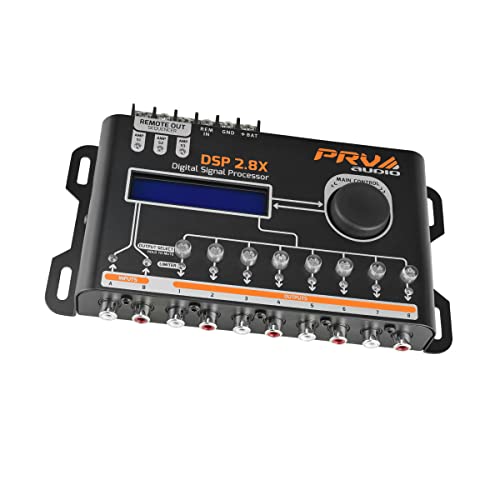
PRV Audio DSP 2.8X
$83.01Eight outputs with app-based control, a reasonable step up for a build adding a third active way or a dedicated subwoofer channel beyond a basic 4-output unit.
Check price on Amazon
Dayton Audio DSP-408
$199.98Four inputs and eight outputs make this a real option for a fully active multi-source build, with PC software giving fine control over every channel's delay and crossover.
Check price on Amazon
Hertz SPL Show S8 DSP
$419.99A competition-oriented 8-output unit listed at 419.99 dollars, built for builders chasing the finest possible tuning control rather than a first DSP purchase.
Check price on AmazonFrequently asked questions
- Do I need a DSP if I already have a good head unit?
- Most factory and aftermarket head units have limited or no time alignment and only basic crossover slopes. A DSP adds per-channel delay and steeper, more flexible crossover points that a head unit's built-in tone controls cannot match. If the system already sounds tight and correctly staged, a DSP is optional, but most systems gain more from a DSP than from another equipment upgrade.
- How many channels do I need on a DSP?
- Count the speakers being run actively, not passively. A basic 2-way front stage plus a subwoofer, run passively on the mid and tweeter, only needs a few output channels for time alignment and a subwoofer crossover. A fully active 3-way front stage plus a subwoofer needs at least 7 outputs. Buy for the setup planned a year out, not just today.
- Can I install and tune a DSP myself?
- Wiring one in is similar to installing any other in-line audio component. Tuning it well takes more patience, since time alignment is usually set by measuring distance from each speaker to the listening position and crossover points take some trial and listening. Many DSPs include a guided setup mode in their app, which makes a reasonable first pass achievable without a professional tuner.
- What does EQ band count actually change?
- More bands means finer control over narrow frequency dips or peaks caused by a speaker's mounting location or the car's cabin shape. A basic system with well-set time alignment and crossovers benefits less from extra bands than a system that is already dialed in and chasing smaller refinements. Band count matters more to an experienced tuner than to a first-time DSP buyer.
- Is a Bluetooth-controlled DSP worse than a PC-tuned one?
- Not inherently. Bluetooth and app control mainly change how convenient it is to make adjustments after the initial install, since changes can be made from the driver's seat instead of reconnecting a laptop. Processing quality depends on the DSP's own hardware and available bands and channels, not on whether it is tuned by phone app or PC software.
- Do I need a DSP for a simple two-speaker upgrade?
- A basic two-speaker replacement with no subwoofer and no additional amplifier channels usually does not need a DSP, since there is only one pair of speakers to align and a head unit's basic crossover is often enough. A DSP earns its keep once a system adds a subwoofer, multiple amplifier channels, or a fully active multi-way front stage.
Researched guidance, not professional advice. Set gains correctly first, then use time alignment and per-channel crossovers to fix what wiring alone cannot, since that is where most of a DSP's real benefit comes from.